
1 / 9
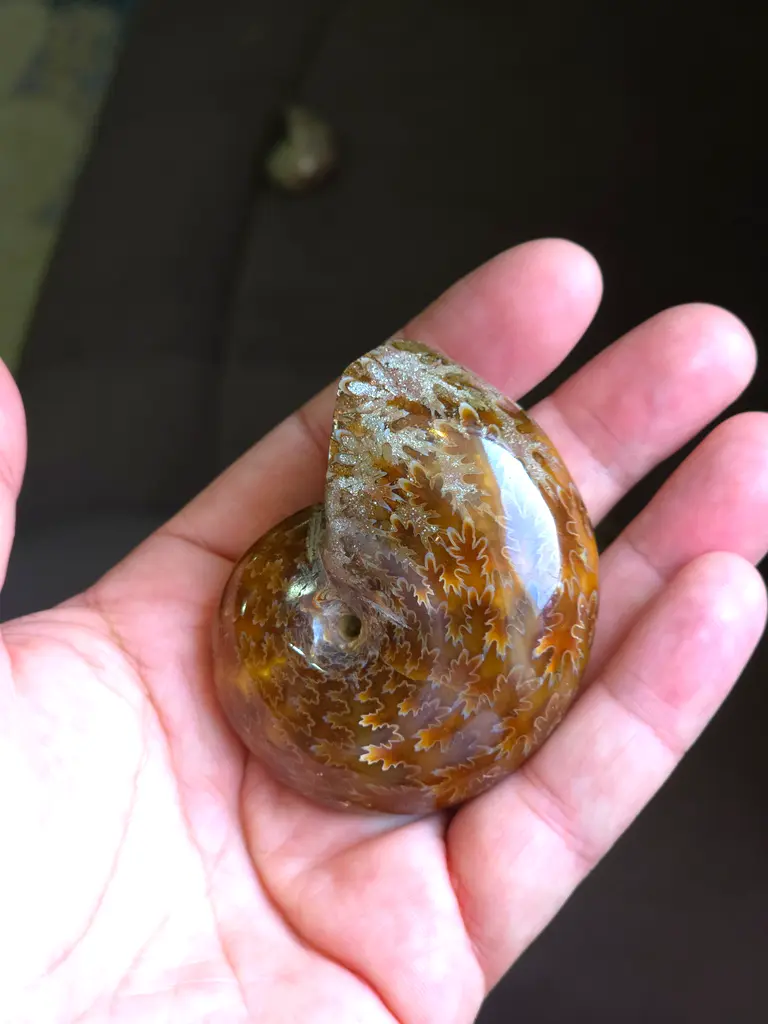
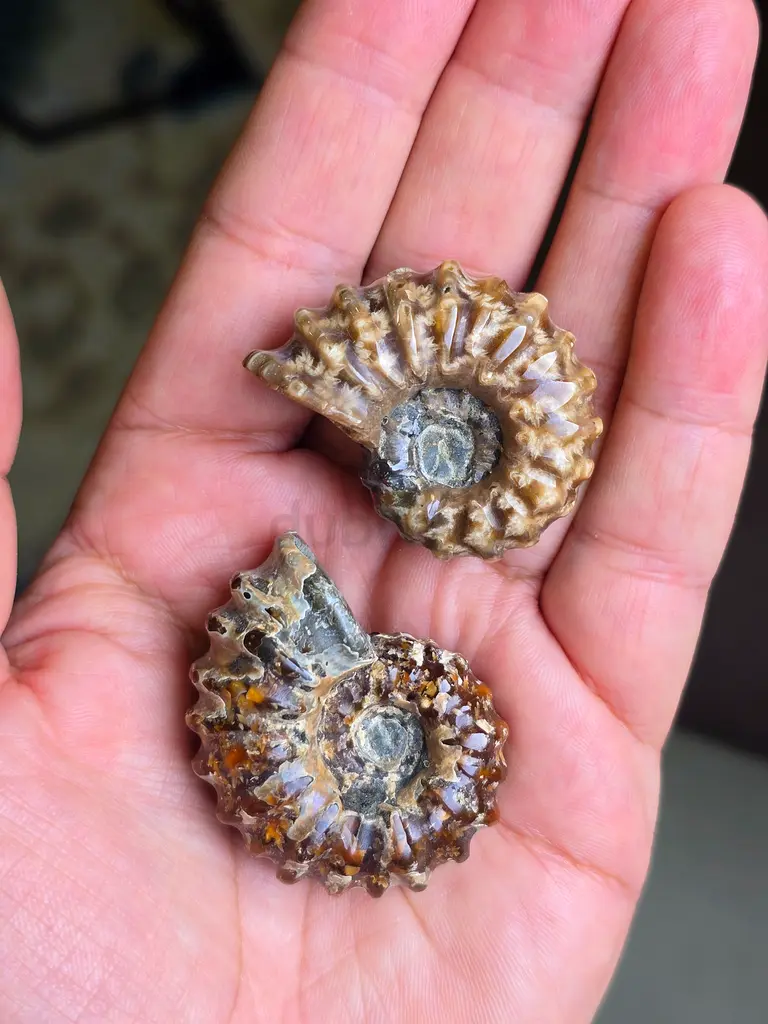
Ammonite fossilized millions of years old
درهم 1,000

تفاصيل السلعة
العمر
10 سنوات وأكثر
الحالة
ممتازة من الداخل والخارج
مدى الإستخدام
لا يزال في التغليف الأصلي
تم النشر بتاريخ: 4 يناير 2026
الوصف
Ammonites are extinct marine mollusks that are more closely related to modern-day octopuses and squids than to the nautilus they resemble.
These specific pieces have been cut and polished to reveal their internal structure, which tells a fascinating story of prehistoric biology.
Key Features of Your Specimen
Septa and Chambers: The "walls" you see dividing the shell are called septa. The animal lived only in the largest, outermost chamber. As it grew, it moved forward and built a new wall behind it, creating a series of empty chambers used for buoyancy.
Mineralization: Over millions of years, minerals (likely calcite or quartz) seeped into the hollow chambers. The variety of colors you see—from earthy browns to translucent yellows—depends on the specific mineral content of the sediment where they were buried.
Suture Patterns: The intricate, wavy lines visible on the surface are called sutures. These represent the complex "stitching" where the internal septa met the outer shell. In ammonites, these patterns became increasingly complex over evolutionary time to help the shell withstand deep-water pressure.
Fast Facts
Age: These are likely from the Jurassic or Cretaceous periods, making them anywhere from 66 to 200 million years old.
Golden Ratio: They are famous examples of the Logarithmic Spiral in nature, often associated with the Fibonacci sequence.
Extinction: They went extinct at the same time
These specific pieces have been cut and polished to reveal their internal structure, which tells a fascinating story of prehistoric biology.
Key Features of Your Specimen
Septa and Chambers: The "walls" you see dividing the shell are called septa. The animal lived only in the largest, outermost chamber. As it grew, it moved forward and built a new wall behind it, creating a series of empty chambers used for buoyancy.
Mineralization: Over millions of years, minerals (likely calcite or quartz) seeped into the hollow chambers. The variety of colors you see—from earthy browns to translucent yellows—depends on the specific mineral content of the sediment where they were buried.
Suture Patterns: The intricate, wavy lines visible on the surface are called sutures. These represent the complex "stitching" where the internal septa met the outer shell. In ammonites, these patterns became increasingly complex over evolutionary time to help the shell withstand deep-water pressure.
Fast Facts
Age: These are likely from the Jurassic or Cretaceous periods, making them anywhere from 66 to 200 million years old.
Golden Ratio: They are famous examples of the Logarithmic Spiral in nature, often associated with the Fibonacci sequence.
Extinction: They went extinct at the same time
منطقة
الياسمين, عجمان, الإمارات

- المحاسبة / المالية
- السيارات
- الصحة والجمال
- التنظيف /التدبير المنزلي
- الإنشاءات
- شيف / طباخ
- خدمة العملاء / مركز الإتصال
- إدارة وتحليل البيانات
- التصميم
- سائق / توصيل
- تعليم
- هندسة
- إدارة الفعاليات والمناسبات
- عامل / فنّي
- الموارد البشرية - الإدارة
- تكنولوجيا المعلومات
- خدمات قانونية
- خدمات لوجستية و توزيع
- التصنيع / التخزين
- كابتن بحري / بحار
- التسويق/الإعلان
- الاعلام,الفنون والترفيه
- الطب / الرعاية الصحية
- عقارات
- تشغيل المطاعم
- المبيعات / تطوير الأعمال
- السكرتارية / المكتب الأمامي
- الأمن /الحماية
- رياضة و لياقة
- السفروالضيافة
- أخرى
- يبحث عن عمل
English